
We’ve all experienced the situation: a specific medical need, a quick search on the phone, and a dozen similar results without knowing which one we can trust. The reflex to type the name of a specialty followed by the city in a search engine is no longer enough to identify a reliable healthcare professional. With public directories, private platforms, and patient reviews, the sources multiply, but their reliability varies significantly.
Check the legal registration of a practitioner before making an appointment
Before even looking at reviews or the availability of a doctor, one can check a decisive point: is the practitioner properly registered with their regulatory authority? Regulated health professions (doctors, dentists, midwives, physiotherapists) are registered with their professional order, and this information is public.
For professions that do not fall under an order, such as certain psychotherapists, it is necessary to ensure that the practitioner is recognized by the competent administrative authorities. Registration in the professional registry remains the first safety filter to eliminate unregulated practices.
The directory on the Santé.fr website, managed by public authorities, currently lists more than 750,000 health professionals and establishments. You can filter by type of service, location, or specific need, including agreements or accessibility for disability situations. You can also find professionals on Santé Boost, which offers structured access by specialty to guide your search more quickly.
Santé.fr and Ameli: what each tool concretely offers
Santé.fr and the Ameli directory do not provide the same service. Confusing them wastes time.
Santé.fr covers the entire range of healthcare services, including hospitals, health centers, and medico-social structures. Its strength lies in the search by need: you can start from a situation (walk-in consultation, wheelchair access) rather than a specialty name.
The Ameli directory, on the other hand, focuses on contracted liberal health professionals. It indicates the sector of agreement (1 or 2), which allows anticipating the out-of-pocket costs before making an appointment. For a general practitioner or a city specialist, this is often the most useful starting point.

Feedback varies on this point, but in practice, cross-referencing the two sources provides a more complete picture than relying on a single private platform.
Online patient reviews: what they really reveal about a practitioner
The majority of patients consult online reviews before choosing a new practitioner. This reflex is understandable, but reading a patient review requires a specific perspective in the medical field.
An isolated negative review about the reception or waiting time says nothing about clinical competence. In contrast, recurring comments about a lack of listening, absence of explanation of the diagnosis, or vague pricing practices deserve attention. Here are the signals to watch for:
- The consistency between reviews: a practitioner with regular and consistent feedback over several months inspires more trust than a profile with three glowing reviews published in the same week
- The professional’s response to negative reviews: a practitioner who responds professionally shows that they take patient feedback into account
- The source platform: reviews published on verified sites (Doctolib, Google Business Profile) carry more weight than those posted without identity verification
Online reviews are also governed by strict ethical rules. A healthcare professional cannot solicit false testimonials, and platforms are required to moderate defamatory content.
Teleconsultation or office visit: choose based on the actual medical situation
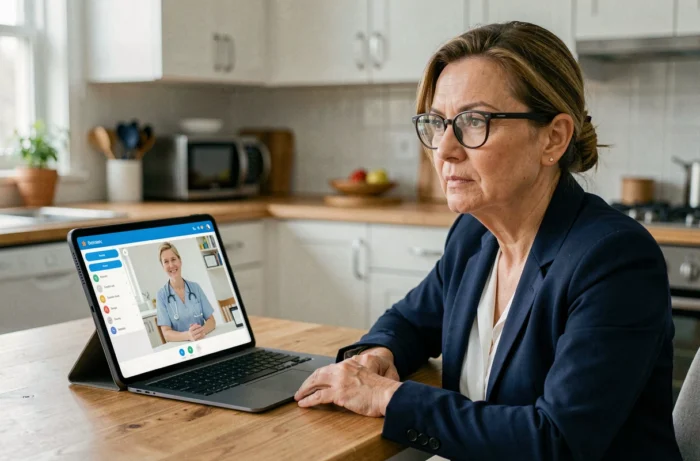
Teleconsultation does not replace a physical examination, but it covers a broader spectrum of situations than one might think. For prescription renewals, dermatological advice via photo, or regular psychiatric follow-ups, video consultations avoid travel without compromising medical quality.
Several platforms share the market in France: Doctolib, Qare, Livi, Maiia, Hellocare, and Médecindirect. They do not all offer the same specialties or availability times.
Concrete criteria for choosing a teleconsultation platform:
- Availability in the sought specialty: some platforms cover more than 50 specialties, while others focus on general medicine
- Reimbursement by Health Insurance: teleconsultations are reimbursed under the same conditions as a standard consultation, provided the coordinated care pathway is followed
- The possibility of follow-up: a practitioner who offers a report and post-consultation guidance provides true continuity of care
- Compatibility with the Vitale card app, which is gradually being deployed for tele-services and NFC reading by professionals
First contact with a practitioner: the unmistakable signs
You can check all the online bases, but the first appointment remains decisive. A few concrete elements allow you to assess whether the practitioner meets your expectations.
A professional who explains their diagnosis and therapeutic alternatives demonstrates a patient-centered approach. Conversely, a consultation rushed through in a few minutes without the opportunity to ask questions should raise alarms.
Price transparency also matters: a practitioner in sector 2 who clearly displays their excess fees before the appointment facilitates the decision. Platforms like Ameli allow you to verify this point even before picking up the phone.
Ultimately, choosing a healthcare professional relies on a combination of factual checks (registration, agreement, sourced reviews) and a human evaluation during the first exchange. No platform can replace this dual filter.