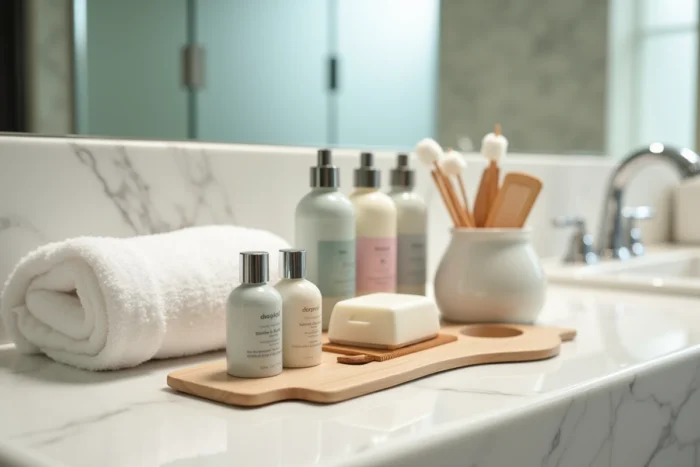
Between the miniature soap placed near the sink and the shower cap tucked away in a drawer, the toiletries offered by a hotel vary significantly depending on the category of the establishment. Understanding what is actually included in the price of the night can lighten your luggage, but also help avoid unpleasant surprises at check-out.
Hotel Welcome Products: What Each Category Offers
The range of complimentary toiletries directly depends on the classification of the establishment. The table below summarizes the products most commonly found according to the number of stars.
| Category | Almost Systematic Products | Frequent Products | Rare or Absent Products |
|---|---|---|---|
| 1-2 stars | Soap, shower gel (often in wall-mounted dispensers) | Basic shampoo | Conditioner, dental kit, shaving kit |
| 3 stars | Soap, shower gel, shampoo | Shower cap, sewing kit | Body lotion, cotton swabs |
| 4 stars | Soap, shower gel, shampoo, conditioner, body lotion | Dental kit, shower cap, cotton pads, nail files | Hair mask, bath salts |
| 5 stars / Palace | Complete branded range (shampoo, conditioner, lotion, face and body soap) | Shaving kit, premium dental kit, slippers, bathrobe | No common product is absent |
A detail often overlooked: The Atout France ranking criteria incorporate the perceived quality of welcome products into the overall comfort rating. Hoteliers aiming for a higher category therefore invest in more refined ranges, which directly benefits the customer.
To find out which complimentary toiletries for hotels are offered according to the establishments, the difference often lies in the brand and formulation of the products rather than their quantity.
Wall Dispensers or Individual Miniatures: A Turning Point for Travelers
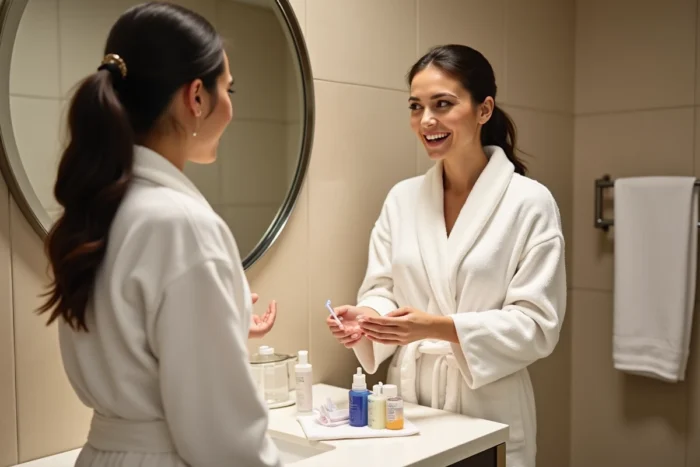
In recent years, a discreet yet profound shift has been taking place in hotel bathrooms. Plastic miniatures are being replaced by refillable wall-mounted dispensers, even in mid-range establishments. This transition responds to a dual logic: reducing the volume of single-use plastic and compressing the unit cost per room.
For the traveler, the change has concrete consequences. Individual bottles could be taken (which was part of their appeal). With a wall-mounted dispenser, the product remains in the room. The service is still free, but there’s nothing left to slip into your toiletry bag.
Some chains compensate by offering “single-dose” formats for shampoo or conditioner, packaged in compostable sachets rather than plastic bottles. Others focus on solid products (soap, shampoo bars) presented in cardboard packaging. The complimentary product does not disappear, but its format changes radically.
Hypoallergenic Products and “Clean” Ranges on the Rise
Customer feedback on skin irritations and allergies has prompted a growing number of hotels to select products free from parabens, harsh sulfates, and certified hypoallergenic. This upgrade mainly concerns three-star establishments and above, where the quality of welcome products weighs heavily in online reviews.
A traveler with sensitive skin is therefore more likely than a few years ago to find suitable formulations in their room, without having to bring their own products.
Complimentary Toiletries in Hotels: What Can Be Taken and What Cannot
Confusion persists among many guests. Here is a simple rule that has consensus in the hotel profession:
- Single-use consumable products (wrapped soap, individual shampoo bottles, shower caps, dental kits, sewing kits, tea and coffee sachets) are considered complimentary. They can be taken without issue.
- Wall dispenser products, bathrobes, towels, and hairdryers are part of the room’s equipment. Taking them would be considered theft, and the hotel may charge for their replacement.
- Disposable slippers and earplugs, when provided in individual packaging, fall into the consumable category. They are portable.
In case of doubt, the most reliable criterion remains the sealed individual packaging. If the product is packaged for single use, it is intended for the guest. If it is a reusable item placed in the bathroom, it belongs to the hotel.
Some Hotels Now Charge for Products That Were Once Free
A recent phenomenon deserves the attention of travelers. Some establishments, including within recognized chains, have begun to charge for certain hygiene items that were previously included in the price of the night. A dental kit or shaving kit, for example, may appear on the final bill if it is presented in a display with a price tag.
This practice remains minority, but it is growing in a context of pressure on hotel margins. The cost of welcome products, multiplied by the number of rooms and occupancy rate, represents a budget item that some managers seek to rationalize.
How to Spot Paid Products
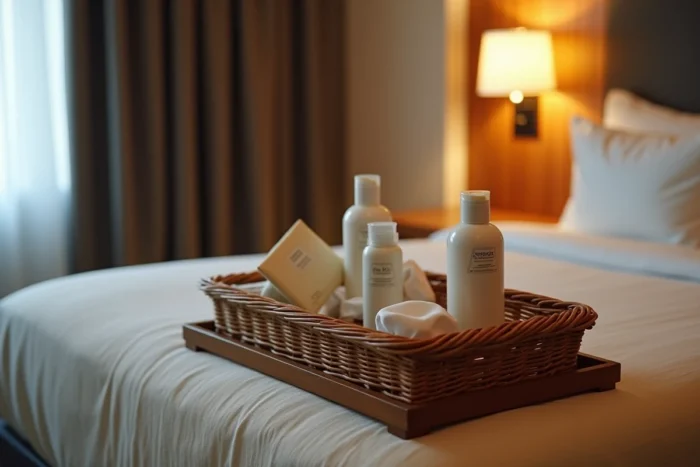
Before opening a package, check if it has a price tag or if it is arranged in a basket accompanied by a price card. Truly complimentary products are generally placed directly on the sink or in a bathroom drawer, without any mention of price. The presence of a barcode or price on the packaging indicates a paid product.
In high-end establishments, the question rarely arises: all welcome products are included. It is in the mid-range category (two to three stars) that vigilance is most useful.
The general trend remains one of a free service that is transforming rather than disappearing. Formats are changing, formulations are improving, and the line between complimentary and charged products simply requires a glance before use.