Organizing a vacation with family or friends involves reconciling sometimes opposing expectations: budget, pace, type of activities, duration of the stay. The first Family Travel Barometer conducted by Voyage Family in 2026 reveals that 60% of families use or plan to use AI to prepare their vacations. This figure reflects a need to streamline planning, not just to dream about a destination.
Comparing stay formats based on measurable criteria allows for choosing the one that generates the least friction and the most shared satisfaction.
Stay in France, Europe, or long-haul: the format that impacts the group budget
The choice of destination conditions almost all other decisions. Rather than listing cities, it’s better to outline the variables that truly distinguish each format for a group or family.
| Criterion | France (proximity) | Europe (short/medium-haul) | Long-haul |
|---|---|---|---|
| Transport per person | Low (car, train) | Moderate (low-cost flight, train) | High (long-haul flight) |
| Group coordination | Flexible (staggered departures possible) | Medium (common flight recommended) | Rigid (group booking) |
| Collective accommodation | Gîtes, campsites, seasonal rentals | Shared apartments, villas | Resorts, family hotels |
| Child-friendly activities | Very wide choice (mountains, beaches, parks) | Variable depending on the destination | Often supervised by the resort |
| Risk of budget deviation | Limited | Medium (exchange rates, extras) | High (insurance, time zone differences) |
France remains the dominant reflex for families looking to control the overall budget.
To compare available group or family stay offers, Vacanceo allows filtering by destination, budget, and type of accommodation, simplifying the pre-selection phase when expectations diverge.

Multigenerational vacations: a rapidly growing format
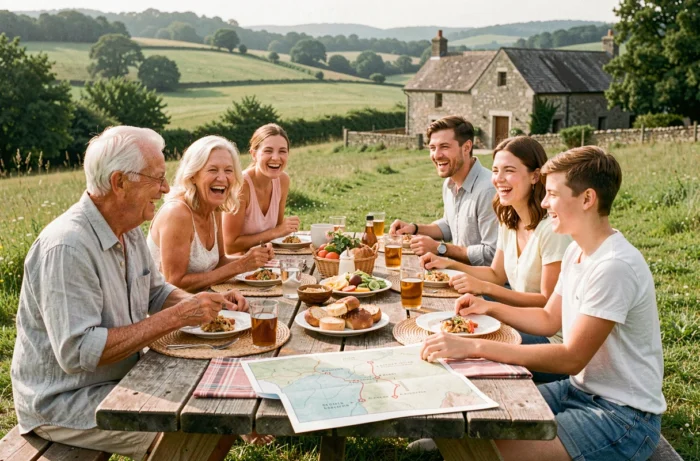
The Travel Trends Report 2026 from Skyscanner, cited by the University of Zurich, ranks multigenerational travel among the major trends of 2026. Grandparents, parents, and children travel together, sharing costs and co-planning.
This format is not trivial from a logistical standpoint. It imposes constraints that a classic stay among friends or in a nuclear family does not.
- Accommodation must offer separate spaces with common areas (large capacity gîte, multi-bedroom rental) so that each generation can maintain its own pace
- Activities must cover a wide physical spectrum: gentle hiking and supervised swimming coexist with more sporty outings for active adults
- The destination benefits from being accessible without complex air connections, as seniors and young children struggle with fragmented travel
In France, the mountains in summer and the beaches along the Atlantic coast meet these criteria well. The multigenerational format works best when each subgroup has an autonomous time slot during the day.
Vacation budget 2026: where French priorities lie
The budget contraction observed in 2026 redistributes family priorities, notably with a decrease in restaurant visits at the destination.
The accommodation category absorbs the largest share. In contrast, activities on-site face sharper cuts: families prioritize free nature outings (hiking, beaches, lakes) over paid activities (amusement parks, supervised water sports).
On-site dining is declining in favor of cooking in rental accommodations. This shift explains the growing popularity of accommodations equipped with a kitchen, whether in a gîte, high-end campsite, or vacation apartment. For a group of six to ten people, the difference over a week between restaurant meals and collectively prepared meals amounts to hundreds of euros.
Free or low-cost activities that keep a group engaged
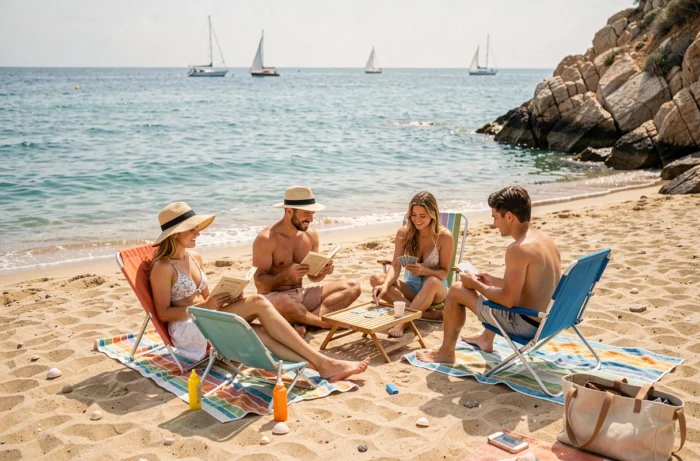
A stay in the mountains provides access to hiking, swimming in lakes, and picnics at altitude without additional costs. On the coast, renting sea kayaks or snorkeling replaces organized excursions.
For groups of friends, board game nights, cooking challenges between teams, or night hikes create memories without inflating the bill. The most memorable activities are rarely the most expensive.
Collective preparation: reducing friction before departure
The Family Travel Barometer 2026 highlights that preparation is now “fragmented” across word-of-mouth, booking platforms, and AI tools. This fragmentation generates confusion when several people participate in the organization.
Three levers effectively reduce tensions in advance:
- Set the budget per person before choosing the destination, not the other way around – this eliminates out-of-scope proposals from the start
- Designate a single coordinator for reservations (accommodation, transport), even if decisions are made collectively
- Use a shared document (spreadsheet, common budget app) to track expenses in real-time and avoid tensions at the time of reconciliation
The main factor for the failure of a group stay remains budget ambiguity, not the choice of destination. A well-organized camping weekend leaves better memories than a week in a villa where no one knows who owes what.
Families and groups of friends who frame these three points before departure significantly reduce the risk of disappointment. The stay truly begins when logistics cease to be a topic of conversation.